


Preventing complications
As a dialysis patient, it is important that you perform your vital treatment, dialysis, regularly.
For this reason, you must stay healthy and take good care of your catheter or a fistula / graft, in order to enable your dialysis treatment to last for a long time.
Home environment
In addition to a storage room for the materials required for peritoneal dialysis (e.g., for PD solutions and consumables) and a dialysis room may be required. A closet-sized space is typically needed for supplies. Your clinical staff will talk with you about how to organize your supply storage area. It should have lockable windows and doors.
Particularly important basic hygiene measures during dialysis are:
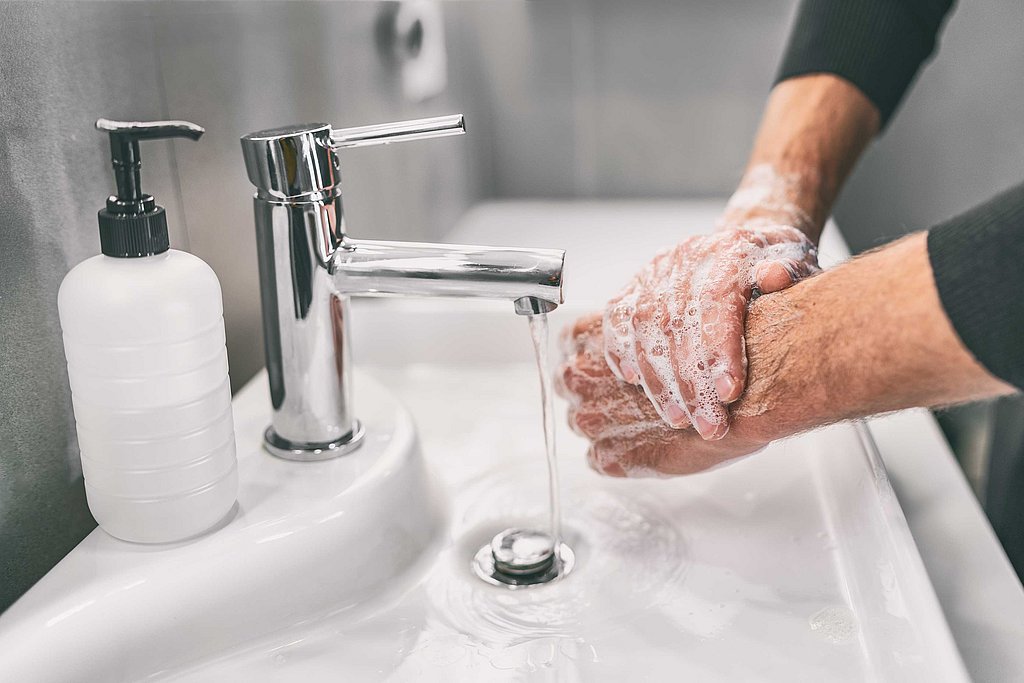
- Hygienic hand disinfection
- Disinfectant cleaning of all equipment, machines and surfaces near the patient after each treatment
- Removal of pets from the room while performing dialysis
- Asking other people in the room to follow basic hygiene measures as well
- Making sure not to get interrupted, e. g. closing doors
You will learn how to carry out the appropriate surface disinfection of the immediate environment of your treatment, including furniture in your dialysis room, in a detailed training session with your dialysis team.

Peritoneal dialysis (PD) catheter
As with any medical treatment, problems occur related to peritoneal dialysis. However, not everyone may experience complications. We want you to be aware of some of the possible problems related to the peritoneal dialysis treatment that may occur so that you know how you can understand them better. During training, your clinical team will explain in detail what action you have to take if certain problems occur before, during, or after your PD treatment.
If you have a dialysis catheter implanted, ask yourself daily:
- Is the dressing clean and dry?
- Are the clamps and caps closed?

HD vascular access
As with any medical treatment, there may be problems related to hemodialysis. Complications may be related to the dialysis procedure or the underlying kidney disease itself.
Not everyone will experience complications. Be aware of some possible problems related to the HD treatment that may occur and know how to potentially manage them.


